Nov 20, 2025

·

6 min read

Your Pet's Health, Predicted: How AI Monitoring Catches Problems Before They Start

Anny Ma
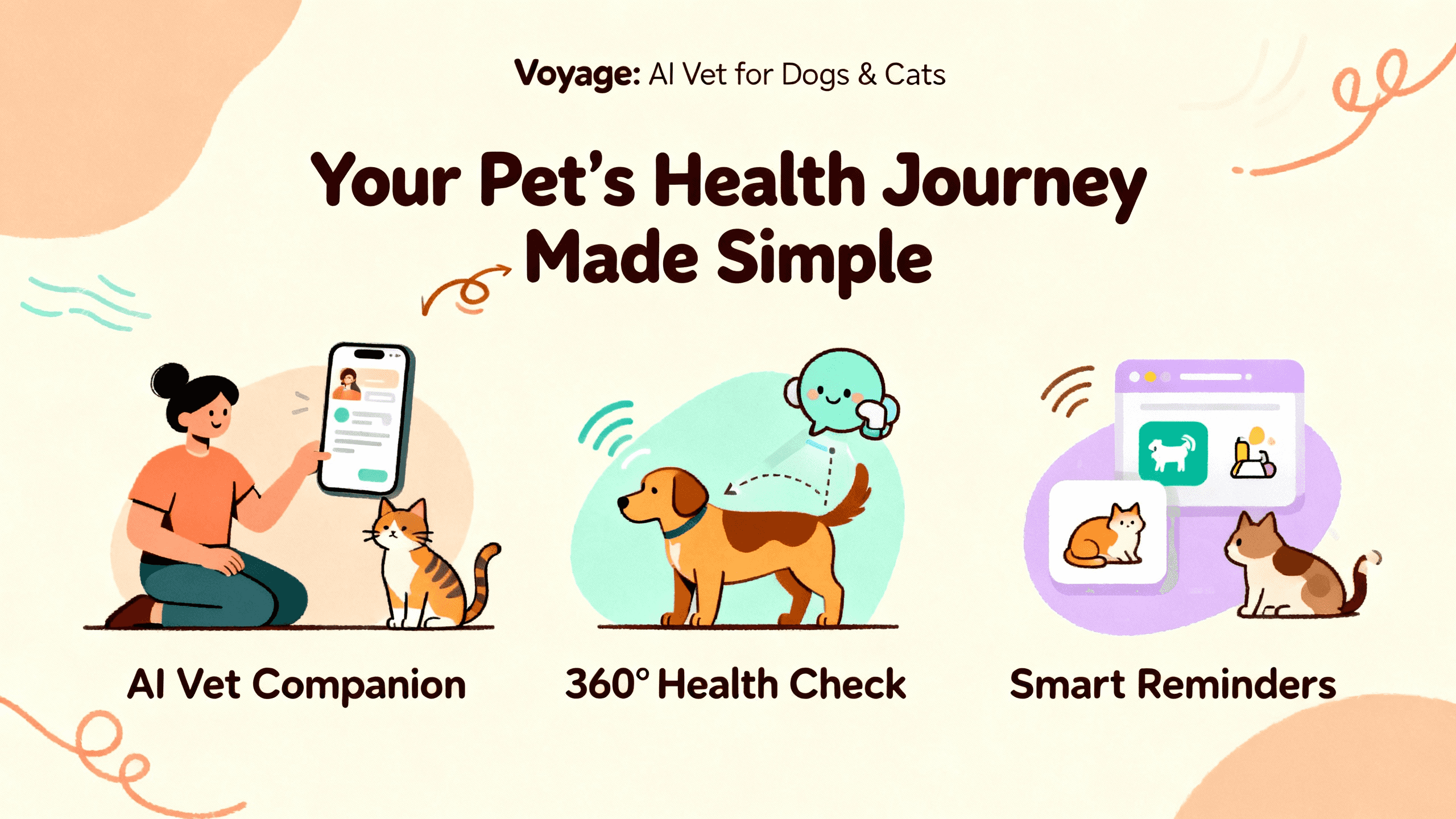
Remember when the only way to know if your pet was sick was waiting for obvious symptoms? Those days are ending. AI-powered pet health monitoring is transforming how we care for our furry family members—catching health issues before they become emergencies.

What Is AI Pet Health Monitoring?

Think of it as a fitness tracker meets early warning system for your pet. AI health monitoring combines wearable sensors and smart devices with machine learning to continuously track your pet's vital signs, behavior, and wellness patterns. When something looks off—even slightly—the system alerts you, often days or weeks before you'd notice symptoms yourself.

The technology works by collecting massive amounts of data about your pet's normal patterns. Over time, AI learns what's typical for your specific pet and flags deviations that could indicate developing health issues.

Why Your Pet Needs More Than Just Annual Vet Visits

Here's the reality: pets are masters at hiding pain and illness. By the time symptoms are obvious, the condition has often progressed significantly. Traditional annual checkups, while essential, only capture a single snapshot of your pet's health.

AI monitoring fills the gap with 24/7 observation. It's like having a veterinary assistant watching your pet around the clock, noticing subtle changes that would be impossible for any human to track consistently.

Early detection matters financially too. Catching diabetes early might mean dietary changes. Catching it late might mean insulin shots, emergency vet visits, and thousands in bills. The same pattern holds for kidney disease, heart conditions, and dozens of other common pet health issues.

What Can AI Pet Health Systems Actually Detect?

Modern AI pet health platforms monitor multiple health dimensions:

Vital Signs: Heart rate, respiratory rate, temperature, and activity levels provide the foundation for health monitoring. Devices like PetPace pioneered continuous vital sign tracking, while platforms like Voyage integrate this data with your pet's complete health picture.

Behavioral Changes: Is your cat sleeping more? Drinking less water? These subtle shifts often signal health problems before physical symptoms appear. AI excels at spotting these gradual changes that happen too slowly for busy pet owners to notice.

Pain and Discomfort: Advanced systems can detect early signs of pain through changes in movement patterns, rest quality, and activity levels—allowing intervention before your pet is suffering noticeably.

Digestive Health: From smart litter boxes like Petivity that track bathroom habits to apps analyzing stool consistency, AI monitors digestive wellness continuously.

Cardiac Issues: Some specialized devices can detect early signs of heart failure and arrhythmias—conditions where early detection dramatically improves outcomes.

The AI Pet Monitoring Landscape: What's Actually Available?

The market has exploded with options, but they fall into three categories:

Single-Purpose Devices focus on one health aspect. PetPace collars excel at vital sign monitoring. Petivity specializes in cat-specific litter box tracking. These work well if you have a specific concern, but you'll need multiple devices for comprehensive monitoring.

Smart Collars with Add-Ons like Fi offer GPS tracking, activity monitoring, and behavior patterns—great for active dogs but limited in medical insights.

Comprehensive Health Platforms like Voyage consolidate everything: wearable data, veterinary records, nutrition tracking, behavior analysis, and medical history in one place. Instead of juggling multiple apps and devices, you get a unified view of your pet's complete health story.

The difference matters. A collar might tell you your dog's heart rate increased. An integrated platform correlates that increase with recent vaccination records, notes it coincides with decreased appetite, and suggests follow-up with your vet for a possible vaccine reaction.

Is AI Pet Health Monitoring Worth the Investment?

Let's talk numbers. Smart collars typically run $200-400 upfront plus monthly subscriptions ($15-30). Litter box monitors cost $100-200. Comprehensive platforms vary but often include multiple features for a single subscription.

The cost-benefit calculation depends on three factors:

  1. Your pet's health status: Senior pets and those with chronic conditions benefit most. The earlier you start monitoring, the more baseline data you build.

  2. Emergency prevention savings: One avoided emergency vet visit ($1,000-3,000) pays for years of monitoring. Early detection of chronic conditions saves even more long-term.

  3. Your peace of mind: Knowing your pet is being monitored 24/7, especially when you're at work or traveling, has value that's hard to quantify.

For most pet owners, the break-even point comes quickly—often after preventing just one serious health incident.

How to Get Started with AI Pet Health Monitoring

Setting up AI monitoring is simpler than you might think:

Step 1: Choose Your Approach Decide whether you want single-purpose devices or a comprehensive platform. If your pet has specific health concerns (heart issues, weight management), specialized devices make sense. For general wellness and prevention, an integrated platform provides more value.

Step 2: Setup and Baseline Most systems follow a similar pattern: attach the device, download the app, and let the AI learn your pet's normal patterns for 1-2 weeks. This baseline period is crucial—it's how the system learns to spot anomalies.

Step 3: Integrate with Your Vet Choose systems that share data with your veterinarian. At Voyage, we designed our platform so your vet can access your pet's complete health history, making appointments more productive and diagnoses more accurate.

Step 4: Act on Insights The best monitoring system is worthless if you ignore alerts. Set up notifications appropriately—urgent alerts for vital sign anomalies, daily summaries for trend changes.

The Accuracy Question: Can You Trust AI Health Monitoring?

AI pet health monitoring isn't perfect, but it's rapidly improving. Here's what research shows:

Activity tracking alone isn't enough for accurate health assessment. Systems that monitor true vital signs—not just steps and movement—provide significantly more reliable health insights.

False positives happen, especially during the baseline learning period. This is why systems that integrate multiple data sources (vital signs + behavior + medical history) are more accurate than single-metric devices.

Specialized applications show high accuracy. AI systems trained for specific conditions—like pregnancy monitoring or heart disease detection—can be remarkably reliable when focused on their specialty.

The platform matters. Voyage improves accuracy by synthesizing multiple data streams: when activity, eating patterns, behavior, and vital signs all shift together, you're seeing a real health change, not a data blip.

The Future Is Proactive Pet Care

We're moving from reactive to proactive pet healthcare. Instead of waiting for illness and responding, we're predicting problems and preventing them.

Think about it: your phone predicts when you'll arrive somewhere based on traffic patterns. Your email flags spam before you see it. Why shouldn't your pet's healthcare be equally predictive?

That's the promise of AI pet health monitoring—and with platforms that integrate all aspects of pet wellness, we're finally making it a reality.

Ready to Transform Your Pet's Healthcare?

The question isn't whether AI pet health monitoring is coming—it's already here. The question is whether you'll adopt it proactively or reactively, after a health scare makes it obvious you should have been monitoring all along.

At Voyage, we built our platform around a simple belief: every pet deserves the same level of health monitoring that modern technology gives humans. Your pet's health patterns become visible, trends surface automatically, and potential problems alert you before they become emergencies.

Because the best time to catch a health problem is before it starts showing symptoms.

Want to see how AI-powered pet health monitoring works in practice? Explore Voyage's platform and discover how we're helping pet owners transform raw data into actionable health insights—keeping pets healthy for years to come.

Remember when the only way to know if your pet was sick was waiting for obvious symptoms? Those days are ending. AI-powered pet health monitoring is transforming how we care for our furry family members—catching health issues before they become emergencies.

What Is AI Pet Health Monitoring?

Think of it as a fitness tracker meets early warning system for your pet. AI health monitoring combines wearable sensors and smart devices with machine learning to continuously track your pet's vital signs, behavior, and wellness patterns. When something looks off—even slightly—the system alerts you, often days or weeks before you'd notice symptoms yourself.

The technology works by collecting massive amounts of data about your pet's normal patterns. Over time, AI learns what's typical for your specific pet and flags deviations that could indicate developing health issues.

Why Your Pet Needs More Than Just Annual Vet Visits

Here's the reality: pets are masters at hiding pain and illness. By the time symptoms are obvious, the condition has often progressed significantly. Traditional annual checkups, while essential, only capture a single snapshot of your pet's health.

AI monitoring fills the gap with 24/7 observation. It's like having a veterinary assistant watching your pet around the clock, noticing subtle changes that would be impossible for any human to track consistently.

Early detection matters financially too. Catching diabetes early might mean dietary changes. Catching it late might mean insulin shots, emergency vet visits, and thousands in bills. The same pattern holds for kidney disease, heart conditions, and dozens of other common pet health issues.

What Can AI Pet Health Systems Actually Detect?

Modern AI pet health platforms monitor multiple health dimensions:

Vital Signs: Heart rate, respiratory rate, temperature, and activity levels provide the foundation for health monitoring. Devices like PetPace pioneered continuous vital sign tracking, while platforms like Voyage integrate this data with your pet's complete health picture.

Behavioral Changes: Is your cat sleeping more? Drinking less water? These subtle shifts often signal health problems before physical symptoms appear. AI excels at spotting these gradual changes that happen too slowly for busy pet owners to notice.

Pain and Discomfort: Advanced systems can detect early signs of pain through changes in movement patterns, rest quality, and activity levels—allowing intervention before your pet is suffering noticeably.

Digestive Health: From smart litter boxes like Petivity that track bathroom habits to apps analyzing stool consistency, AI monitors digestive wellness continuously.

Cardiac Issues: Some specialized devices can detect early signs of heart failure and arrhythmias—conditions where early detection dramatically improves outcomes.

The AI Pet Monitoring Landscape: What's Actually Available?

The market has exploded with options, but they fall into three categories:

Single-Purpose Devices focus on one health aspect. PetPace collars excel at vital sign monitoring. Petivity specializes in cat-specific litter box tracking. These work well if you have a specific concern, but you'll need multiple devices for comprehensive monitoring.

Smart Collars with Add-Ons like Fi offer GPS tracking, activity monitoring, and behavior patterns—great for active dogs but limited in medical insights.

Comprehensive Health Platforms like Voyage consolidate everything: wearable data, veterinary records, nutrition tracking, behavior analysis, and medical history in one place. Instead of juggling multiple apps and devices, you get a unified view of your pet's complete health story.

The difference matters. A collar might tell you your dog's heart rate increased. An integrated platform correlates that increase with recent vaccination records, notes it coincides with decreased appetite, and suggests follow-up with your vet for a possible vaccine reaction.

Is AI Pet Health Monitoring Worth the Investment?

Let's talk numbers. Smart collars typically run $200-400 upfront plus monthly subscriptions ($15-30). Litter box monitors cost $100-200. Comprehensive platforms vary but often include multiple features for a single subscription.

The cost-benefit calculation depends on three factors:

  1. Your pet's health status: Senior pets and those with chronic conditions benefit most. The earlier you start monitoring, the more baseline data you build.

  2. Emergency prevention savings: One avoided emergency vet visit ($1,000-3,000) pays for years of monitoring. Early detection of chronic conditions saves even more long-term.

  3. Your peace of mind: Knowing your pet is being monitored 24/7, especially when you're at work or traveling, has value that's hard to quantify.

For most pet owners, the break-even point comes quickly—often after preventing just one serious health incident.

How to Get Started with AI Pet Health Monitoring

Setting up AI monitoring is simpler than you might think:

Step 1: Choose Your Approach Decide whether you want single-purpose devices or a comprehensive platform. If your pet has specific health concerns (heart issues, weight management), specialized devices make sense. For general wellness and prevention, an integrated platform provides more value.

Step 2: Setup and Baseline Most systems follow a similar pattern: attach the device, download the app, and let the AI learn your pet's normal patterns for 1-2 weeks. This baseline period is crucial—it's how the system learns to spot anomalies.

Step 3: Integrate with Your Vet Choose systems that share data with your veterinarian. At Voyage, we designed our platform so your vet can access your pet's complete health history, making appointments more productive and diagnoses more accurate.

Step 4: Act on Insights The best monitoring system is worthless if you ignore alerts. Set up notifications appropriately—urgent alerts for vital sign anomalies, daily summaries for trend changes.

The Accuracy Question: Can You Trust AI Health Monitoring?

AI pet health monitoring isn't perfect, but it's rapidly improving. Here's what research shows:

Activity tracking alone isn't enough for accurate health assessment. Systems that monitor true vital signs—not just steps and movement—provide significantly more reliable health insights.

False positives happen, especially during the baseline learning period. This is why systems that integrate multiple data sources (vital signs + behavior + medical history) are more accurate than single-metric devices.

Specialized applications show high accuracy. AI systems trained for specific conditions—like pregnancy monitoring or heart disease detection—can be remarkably reliable when focused on their specialty.

The platform matters. Voyage improves accuracy by synthesizing multiple data streams: when activity, eating patterns, behavior, and vital signs all shift together, you're seeing a real health change, not a data blip.

The Future Is Proactive Pet Care

We're moving from reactive to proactive pet healthcare. Instead of waiting for illness and responding, we're predicting problems and preventing them.

Think about it: your phone predicts when you'll arrive somewhere based on traffic patterns. Your email flags spam before you see it. Why shouldn't your pet's healthcare be equally predictive?

That's the promise of AI pet health monitoring—and with platforms that integrate all aspects of pet wellness, we're finally making it a reality.

Ready to Transform Your Pet's Healthcare?

The question isn't whether AI pet health monitoring is coming—it's already here. The question is whether you'll adopt it proactively or reactively, after a health scare makes it obvious you should have been monitoring all along.

At Voyage, we built our platform around a simple belief: every pet deserves the same level of health monitoring that modern technology gives humans. Your pet's health patterns become visible, trends surface automatically, and potential problems alert you before they become emergencies.

Because the best time to catch a health problem is before it starts showing symptoms.

Want to see how AI-powered pet health monitoring works in practice? Explore Voyage's platform and discover how we're helping pet owners transform raw data into actionable health insights—keeping pets healthy for years to come.

Remember when the only way to know if your pet was sick was waiting for obvious symptoms? Those days are ending. AI-powered pet health monitoring is transforming how we care for our furry family members—catching health issues before they become emergencies.

What Is AI Pet Health Monitoring?

Think of it as a fitness tracker meets early warning system for your pet. AI health monitoring combines wearable sensors and smart devices with machine learning to continuously track your pet's vital signs, behavior, and wellness patterns. When something looks off—even slightly—the system alerts you, often days or weeks before you'd notice symptoms yourself.

The technology works by collecting massive amounts of data about your pet's normal patterns. Over time, AI learns what's typical for your specific pet and flags deviations that could indicate developing health issues.

Why Your Pet Needs More Than Just Annual Vet Visits

Here's the reality: pets are masters at hiding pain and illness. By the time symptoms are obvious, the condition has often progressed significantly. Traditional annual checkups, while essential, only capture a single snapshot of your pet's health.

AI monitoring fills the gap with 24/7 observation. It's like having a veterinary assistant watching your pet around the clock, noticing subtle changes that would be impossible for any human to track consistently.

Early detection matters financially too. Catching diabetes early might mean dietary changes. Catching it late might mean insulin shots, emergency vet visits, and thousands in bills. The same pattern holds for kidney disease, heart conditions, and dozens of other common pet health issues.

What Can AI Pet Health Systems Actually Detect?

Modern AI pet health platforms monitor multiple health dimensions:

Vital Signs: Heart rate, respiratory rate, temperature, and activity levels provide the foundation for health monitoring. Devices like PetPace pioneered continuous vital sign tracking, while platforms like Voyage integrate this data with your pet's complete health picture.

Behavioral Changes: Is your cat sleeping more? Drinking less water? These subtle shifts often signal health problems before physical symptoms appear. AI excels at spotting these gradual changes that happen too slowly for busy pet owners to notice.

Pain and Discomfort: Advanced systems can detect early signs of pain through changes in movement patterns, rest quality, and activity levels—allowing intervention before your pet is suffering noticeably.

Digestive Health: From smart litter boxes like Petivity that track bathroom habits to apps analyzing stool consistency, AI monitors digestive wellness continuously.

Cardiac Issues: Some specialized devices can detect early signs of heart failure and arrhythmias—conditions where early detection dramatically improves outcomes.

The AI Pet Monitoring Landscape: What's Actually Available?

The market has exploded with options, but they fall into three categories:

Single-Purpose Devices focus on one health aspect. PetPace collars excel at vital sign monitoring. Petivity specializes in cat-specific litter box tracking. These work well if you have a specific concern, but you'll need multiple devices for comprehensive monitoring.

Smart Collars with Add-Ons like Fi offer GPS tracking, activity monitoring, and behavior patterns—great for active dogs but limited in medical insights.

Comprehensive Health Platforms like Voyage consolidate everything: wearable data, veterinary records, nutrition tracking, behavior analysis, and medical history in one place. Instead of juggling multiple apps and devices, you get a unified view of your pet's complete health story.

The difference matters. A collar might tell you your dog's heart rate increased. An integrated platform correlates that increase with recent vaccination records, notes it coincides with decreased appetite, and suggests follow-up with your vet for a possible vaccine reaction.

Is AI Pet Health Monitoring Worth the Investment?

Let's talk numbers. Smart collars typically run $200-400 upfront plus monthly subscriptions ($15-30). Litter box monitors cost $100-200. Comprehensive platforms vary but often include multiple features for a single subscription.

The cost-benefit calculation depends on three factors:

  1. Your pet's health status: Senior pets and those with chronic conditions benefit most. The earlier you start monitoring, the more baseline data you build.

  2. Emergency prevention savings: One avoided emergency vet visit ($1,000-3,000) pays for years of monitoring. Early detection of chronic conditions saves even more long-term.

  3. Your peace of mind: Knowing your pet is being monitored 24/7, especially when you're at work or traveling, has value that's hard to quantify.

For most pet owners, the break-even point comes quickly—often after preventing just one serious health incident.

How to Get Started with AI Pet Health Monitoring

Setting up AI monitoring is simpler than you might think:

Step 1: Choose Your Approach Decide whether you want single-purpose devices or a comprehensive platform. If your pet has specific health concerns (heart issues, weight management), specialized devices make sense. For general wellness and prevention, an integrated platform provides more value.

Step 2: Setup and Baseline Most systems follow a similar pattern: attach the device, download the app, and let the AI learn your pet's normal patterns for 1-2 weeks. This baseline period is crucial—it's how the system learns to spot anomalies.

Step 3: Integrate with Your Vet Choose systems that share data with your veterinarian. At Voyage, we designed our platform so your vet can access your pet's complete health history, making appointments more productive and diagnoses more accurate.

Step 4: Act on Insights The best monitoring system is worthless if you ignore alerts. Set up notifications appropriately—urgent alerts for vital sign anomalies, daily summaries for trend changes.

The Accuracy Question: Can You Trust AI Health Monitoring?

AI pet health monitoring isn't perfect, but it's rapidly improving. Here's what research shows:

Activity tracking alone isn't enough for accurate health assessment. Systems that monitor true vital signs—not just steps and movement—provide significantly more reliable health insights.

False positives happen, especially during the baseline learning period. This is why systems that integrate multiple data sources (vital signs + behavior + medical history) are more accurate than single-metric devices.

Specialized applications show high accuracy. AI systems trained for specific conditions—like pregnancy monitoring or heart disease detection—can be remarkably reliable when focused on their specialty.

The platform matters. Voyage improves accuracy by synthesizing multiple data streams: when activity, eating patterns, behavior, and vital signs all shift together, you're seeing a real health change, not a data blip.

The Future Is Proactive Pet Care

We're moving from reactive to proactive pet healthcare. Instead of waiting for illness and responding, we're predicting problems and preventing them.

Think about it: your phone predicts when you'll arrive somewhere based on traffic patterns. Your email flags spam before you see it. Why shouldn't your pet's healthcare be equally predictive?

That's the promise of AI pet health monitoring—and with platforms that integrate all aspects of pet wellness, we're finally making it a reality.

Ready to Transform Your Pet's Healthcare?

The question isn't whether AI pet health monitoring is coming—it's already here. The question is whether you'll adopt it proactively or reactively, after a health scare makes it obvious you should have been monitoring all along.

At Voyage, we built our platform around a simple belief: every pet deserves the same level of health monitoring that modern technology gives humans. Your pet's health patterns become visible, trends surface automatically, and potential problems alert you before they become emergencies.

Because the best time to catch a health problem is before it starts showing symptoms.

Want to see how AI-powered pet health monitoring works in practice? Explore Voyage's platform and discover how we're helping pet owners transform raw data into actionable health insights—keeping pets healthy for years to come.

Ready to Dive In?

Kickstart your experience with intelligent support.

Scan to download App

Ready to Dive In?

Kickstart your experience with intelligent support.

Scan to download App

Ready to Dive In?

Kickstart your experience with intelligent support.

Scan to download App